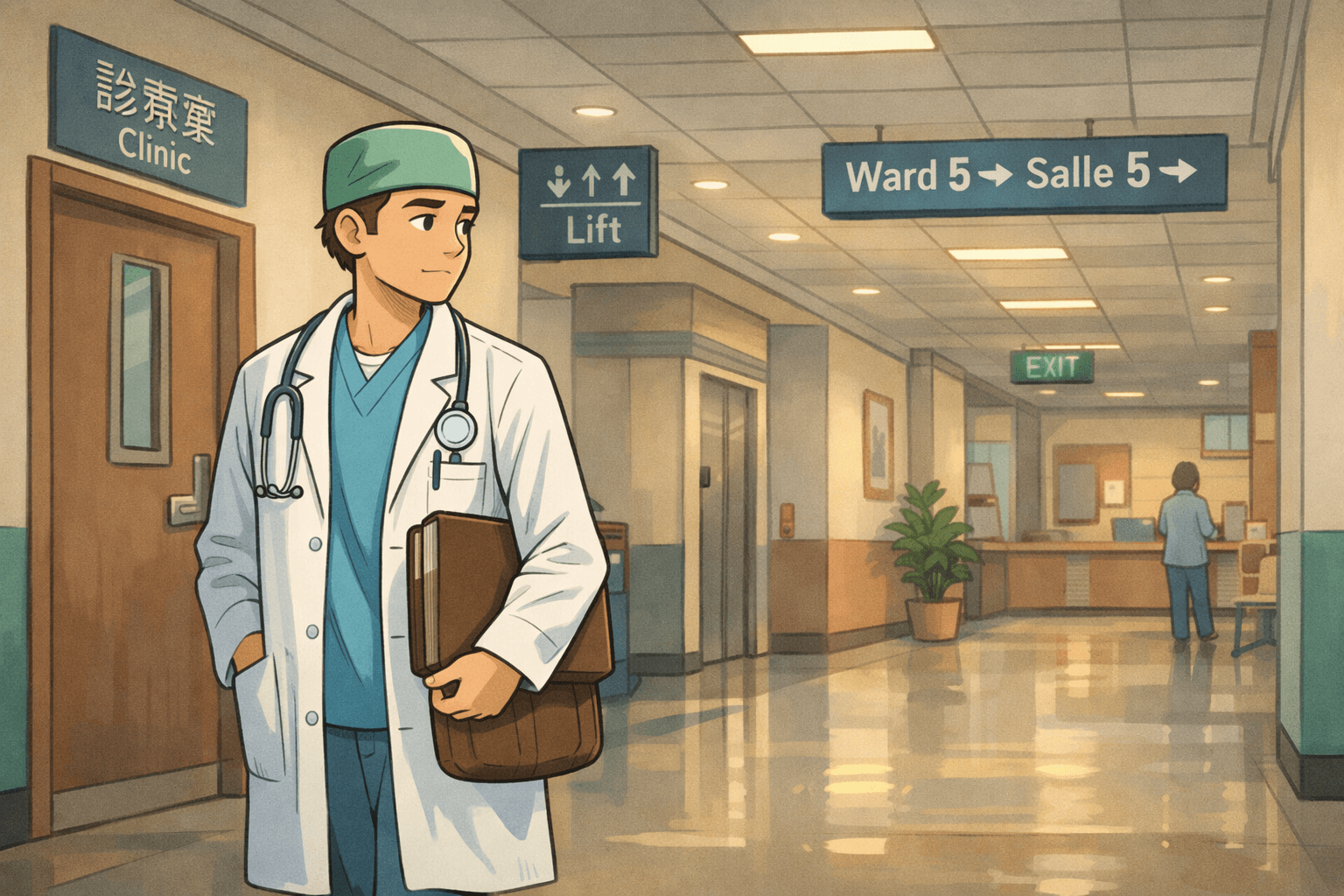
The Things Every Doctor Assumes Before Working Abroad
Most doctors who move abroad carry the same quiet belief: If I’m a competent doctor at home, I’ll be fine overseas.
That assumption is understandable—and wrong.
Before my first year abroad as a doctor, I focused on the obvious things: exams, contracts, visas, and salary. I believed clinical skill would carry me. I thought hard work would be enough. I assumed that once I settled in, life as a foreign doctor would simply become a better, more stable version of what I already knew.
What I didn’t anticipate was how deeply the first year abroad reshapes you—not just professionally, but psychologically. The shock isn’t dramatic. It’s subtle, cumulative, and often isolating. Many doctors struggle silently because they believe the discomfort means they made a mistake, when in reality it means they are going through a normal transition that no one prepares them for.
This article is what I wish I had read before my first year abroad as a doctor. Not to scare you—but to ground you in reality, so you can adapt faster, suffer less, and make better decisions early.
Why the First Year Abroad Is the Hardest Year for a Doctor

The first year abroad is uniquely difficult for a doctor because everything familiar disappears at once.
You are no longer working within a system that understands how you were trained. Protocols are different. Escalation pathways are unfamiliar. Documentation suddenly matters more than clinical instinct. Even simple decisions feel heavier because you don’t yet know how much autonomy you truly have.
For many doctors, this creates a strange contradiction:
You are medically capable, yet constantly second-guessing yourself.
This is not because you are a weak doctor. It is because medicine is deeply system-dependent. A good doctor thrives when they understand the environment they are working in. During the first year abroad, that understanding is incomplete—and the cognitive load is enormous.
Add to this night shifts, cultural differences, medicolegal anxiety, and reduced social support, and it becomes clear why the first year abroad tests doctors more than expected.
Expectation vs Reality: The Doctor Abroad Myth vs the Doctor Abroad Truth
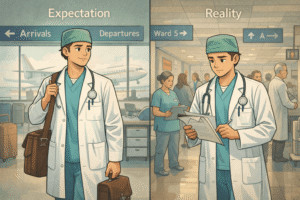
Expectation: Life Will Be Easier Once You Leave Home as a Doctor
Many doctors believe working abroad will automatically mean:
-
Better work–life balance
-
More respect
-
Clearer career progression
-
Less stress
Reality: The First Year Abroad as a Doctor Is Survival Mode
In reality, the first year often feels like controlled instability.
You are learning how the system works while being expected to perform immediately. You are judged not only on clinical decisions, but on communication style, documentation habits, and cultural awareness. Respect is not assumed—it is slowly earned.
For many doctors, this gap between expectation and reality is the most painful part of the transition. It creates frustration, self-doubt, and the dangerous thought that “maybe I’m not good enough,” when the truth is simply that no one warned you what adjustment actually looks like.
Lesson One Every Doctor Learns Abroad: Your Confidence Will Take a Hit

Why a Doctor Can Feel Incompetent Despite Being Experienced
One of the hardest lessons in the first year abroad as a doctor is the loss of confidence.
You may hesitate before decisions you once made instinctively. You may over-investigate because you are unsure of local expectations. You may feel slower, less sharp, or overly cautious.
This happens because:
-
Guidelines differ
-
Drug names and availability change
-
Escalation rules are unfamiliar
-
Documentation standards are stricter
According to the General Medical Council, many international doctors report confidence dips in their first year due to unfamiliar systems rather than lack of knowledge. This is a system issue, not a personal failure.
Confidence returns—but only after repetition, exposure, and acceptance that discomfort is part of adaptation.
Lesson Two for Every Doctor Abroad: Being “Good” at Home Doesn’t Translate Automatically
Clinical Skill vs System Skill for a Doctor Working Abroad
This is uncomfortable to admit, but essential.
A good doctor in one country can struggle in another—not because they are unsafe, but because medicine is practiced differently across systems. Communication style, hierarchy, nursing roles, and patient expectations all change.
In many systems, how you document matters as much as what you do. Defensive medicine is more common. Escalation pathways are rigid. Deviating from protocol—even with good clinical reasoning—can attract scrutiny.
This is why adapting quickly matters more than trying to prove how good a doctor you already are.
Lesson Three Doctors Rarely Talk About: Loneliness Abroad Is Real

The Emotional Cost of Being a Doctor Away From Home
Loneliness is one of the most underestimated challenges for a doctor working abroad.
You may be surrounded by colleagues yet feel isolated. You may function well at work but feel emotionally flat afterward. Time zone differences make staying connected to home difficult. Social energy disappears after long shifts.
Research discussed in British Medical Journal has highlighted higher burnout risk among doctors working in unfamiliar systems without strong social support. This is not weakness. It is human physiology responding to prolonged stress.
Recognizing loneliness early allows you to build routines, connections, and boundaries before burnout develops.
Related Reading : How I Deal With Burnout as a Doctor Working Overseas
Lesson Four a Doctor Learns Quickly: Money Stress Doesn’t Disappear Abroad
Financial Reality for a Doctor in the First Year Overseas
Many doctors assume working abroad will immediately solve financial stress. The reality is more nuanced.
The first year often includes:
-
Higher living costs than expected
-
Exam and registration fees
-
Visa and relocation expenses
-
Family obligations back home
Until you understand your true net income, financial anxiety can persist. This is why budgeting and realistic expectations are crucial for any doctor planning to work abroad.
Related Reading : Financial Mistakes to Avoid as a Doctor Abroad
Lesson Five for a Doctor Abroad: The System Will Not Adapt to You
Adaptability Beats Brilliance in the First Year
One of the most important mindset shifts for a doctor abroad is accepting that the system does not bend easily.
Complaining delays adaptation. Observing accelerates it.
Doctors who settle fastest:
-
Ask questions early
-
Watch how seniors communicate
-
Learn unspoken rules
-
Accept temporary discomfort
According to guidance from the World Health Organization, successful international health professionals adapt by integrating into local systems rather than resisting them. This applies to doctors at every level.
Related Reading : How to Adapt to New Hospital Systems Quickly
What I Would Do Differently If I Started Again as a Doctor Abroad
If I could restart my first year abroad as a doctor, I would focus less on proving myself and more on stabilizing myself.
I would:
-
Expect discomfort instead of fearing it
-
Learn documentation early
-
Build routines outside work immediately
-
Seek informal mentors sooner
-
Protect sleep aggressively during night shifts
Most importantly, I would stop interpreting struggle as failure. Struggle is simply part of becoming a functional doctor in a new system.

Is Working Abroad Still Worth It for a Doctor After the First Year?
Yes—but only if you enter with clear eyes.
After the first year, many doctors report:
-
Improved confidence
-
Stronger adaptability
-
Broader clinical perspective
-
Better long-term opportunities
Working abroad is not for everyone. But for doctors who value growth, resilience, and global experience, the long-term benefits often outweigh the early discomfort.
The first year is not a verdict on your ability as a doctor. It is a transition period that shapes how you practice medicine for the rest of your career.
Final Thoughts for Any Doctor Planning to Work Abroad
If you are planning your first year abroad as a doctor, understand this:
Nothing is “wrong” if the adjustment feels harder than expected. You are not behind. You are not failing. You are learning an entirely new system while carrying the weight of clinical responsibility.
Preparation reduces suffering. Honest expectations protect mental health. And understanding what lies ahead allows you to adapt faster and with less self-blame.
This article exists so you don’t have to learn these lessons the hard way.