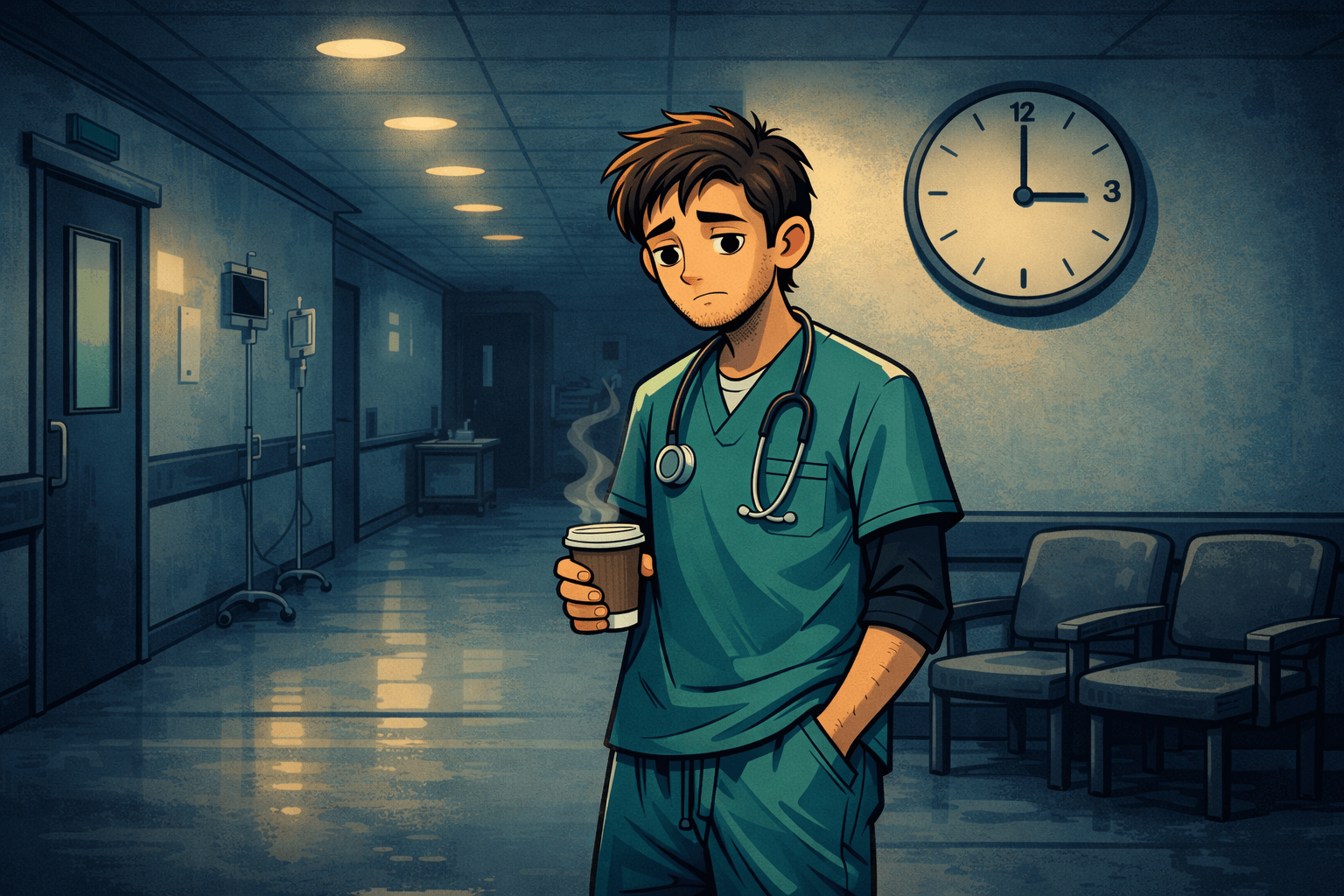

The night shift looks manageable on paper. Same hospital. Same patients. Same responsibilities. Just different hours.
That illusion almost cost me my health.
As a doctor working repeated night shifts, I didn’t burn out overnight. It happened slowly—through chronic sleep deprivation, emotional fatigue, and the quiet normalization of exhaustion. I kept telling myself this was “part of training” or something I’d eventually adapt to.
I didn’t adapt. I deteriorated.
This article is a real, practical breakdown of how I learned to manage night shift work without burning out—not through motivation or discipline, but through systems that respect human biology.
Why the Night Shift Is Different From Every Other Shift
The Night Shift Is a Biological Stress Test
The night shift is not just a scheduling inconvenience. It directly disrupts your circadian rhythm—the internal clock that regulates sleep, hormones, cognition, and mood.
According to the U.S. National Institutes of Health, shift work is associated with increased risks of cardiovascular disease, metabolic disorders, and mental health issues.
This means struggling on the night shift is not weakness. It’s physiology.
Why Doctors Are Especially Vulnerable on Night Shift
Doctors on night shifts face a perfect storm:
-
Sleep deprivation
-
High cognitive demand
-
Emotional labor
-
Life-and-death decisions at circadian low points
Between 3–5 AM—often called the circadian trough—reaction time, memory, and judgment are objectively impaired. This is documented in multiple occupational sleep studies.
Yet we expect ourselves to function flawlessly.
Early Warning Signs I Ignored During Night Shift Work
Night Shift Fatigue Is Not Just Feeling Tired
My early symptoms were subtle:
-
Feeling “wired but exhausted” after the night shift
-
Sleeping but never feeling rested
-
Irritability toward colleagues and patients
-
Emotional numbness rather than stress
I thought burnout meant dramatic collapse. In reality, night shift burnout starts quietly.
Why Motivation Fails on the Night Shift
No amount of discipline can override circadian biology.
Once I stopped treating the night shift as something to “push through” and started treating it as a problem to design around, everything changed.
Burnout wasn’t caused by weakness. It was caused by lack of structure.
My Night Shift System That Prevented Burnout
Pre-Night Shift Routine: The 6–12 Hour Window
Preparing for a Night Shift Starts Before the Hospital
What I stopped doing:
-
Staying awake all day before night duty
-
“Saving sleep” by oversleeping randomly
What actually worked:
-
A 90–120 minute strategic nap in the late afternoon
-
Reduced light exposure before night shift
-
Avoiding heavy meals before starting work
This reduced the shock of switching into night shift mode.
Managing Energy During the Night Shift
Caffeine is not the enemy. Poor timing is.
My rules:
-
No caffeine after 2–3 AM
-
Small, controlled doses
-
Never using caffeine to replace sleep
Overuse of caffeine worsens post-night shift insomnia and increases anxiety.
Nutrition During the Night Shift
Heavy meals during the night shift worsened fatigue.
I shifted to:
-
Light protein-based snacks
-
Avoiding sugar spikes
-
Staying hydrated consistently
This stabilized energy without crashing.
Post-Night Shift Recovery: Where Most Doctors Fail
Sleeping After a Night Shift
Most doctors either:
-
Sleep too long and feel worse
-
Sleep too little and accumulate debt
What worked for me:
-
4–5 hours immediately after night shift
-
Staying awake afterward until a normal bedtime
-
Using blackout curtains and ear protection
This minimized circadian disruption.
The NHS also recommends controlled daytime sleep and light avoidance for night workers.
Protecting Mental Health on the Night Shift
Emotional Burnout on Night Shift Is Real
The night shift strips away social contact, sunlight, and normal routines. Over time, this causes:
-
Emotional blunting
-
Detachment
-
Loss of meaning
I had to lower expectations during night shift rotations. This was not laziness. It was preservation.

The Habit That Prevented Night Shift Burnout
-
Short reflection or journaling
-
Walking outside when sunlight returned
This anchored my identity outside the hospital and prevented emotional flattening.
What I Stopped Doing That Made Night Shift Burnout Worse
-
Forcing social interaction after night shift
-
Comparing myself to “high-energy” colleagues
-
Treating fatigue as personal failure
-
Ignoring early warning signs
Once I respected the night shift as inherently stressful, recovery became possible.
When Night Shift Is Manageable
-
Short rotations
-
Adequate recovery days
-
Supportive scheduling
When Night Shift Becomes Dangerous
-
Long-term permanent nights
-
No recovery sleep
-
Ignoring physical and mental symptoms
Some doctors thrive on night work. Many do not. Both are normal.
Frequently Asked Questions About Night Shift and Burnout
How do doctors survive the night shift without burnout?
By designing sleep, caffeine, nutrition, and recovery systems instead of relying on willpower.
How many hours should you sleep after a night shift?
Most doctors do best with 4–6 hours immediately, followed by gradual realignment.
Are night shifts bad for long-term health?
Long-term night shift work is associated with increased health risks if unmanaged.
Final Thoughts: The Night Shift Changed How I Practice Medicine
The night shift taught me that endurance is not the same as sustainability.
Medicine already demands enough. Destroying ourselves in the process helps no one.
Burnout is not a personal failure.
Once I respected that truth, everything changed.







1 comment
Thanks…. 🥰🥰🥰