Working as a doctor in rural hospitals forces you into situations no lecture hall prepares you for. When you meet patients from different cultures, backgrounds, and belief systems, you quickly realize how much medicine happens outside textbooks. These patients shape your clinical judgment, your communication skills, and your emotional resilience in ways that traditional medical training never could.
Why Patients Teach Lessons No Textbook Can Match
Every doctor eventually discovers that patients don’t behave like the neat case studies printed in clinical guidelines. Medicine becomes unpredictable — and that unpredictability becomes your training ground.
Patients Present Illnesses Differently Than Textbooks Describe
Clinical presentations are often shaped by geography, genetics, and lifestyle. Some patients show classic symptoms; others present rare patterns you’ve never seen.
-
Textbooks assume “ideal conditions”
-
Real patients come with messy, confusing stories
-
Tropical regions reveal infections not seen elsewhere
-
Limited resources force reliance on clinical instinct
The World Health Organization (WHO) notes how regional disease patterns and cultural beliefs influence how people seek care.
Patients Teach Diagnostic Creativity When Resources Are Limited
Some rural hospitals often lack the full spectrum of investigations. No CT scan? No rapid labs? No subspecialists nearby?
These patients push you to:
-
Use clinical judgment over imaging
-
Make decisions with incomplete data
-
Prioritize based on risk rather than textbook flowcharts
This is what doctors mean when they say “working in real life teaches more than in medical school.“
Patients Shape Your Clinical Reasoning Through Their Stories
Textbooks teach symptoms. Patients teach stories — and stories change everything.
How Patients’ Cultural Beliefs Shape the Way They Describe Symptoms
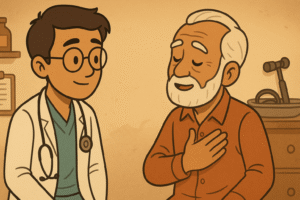
In some countries, patients describe dizziness as “my soul is leaving.”
In others, abdominal pain becomes “a cold wind inside.”
Understanding cultural interpretations becomes just as important as understanding anatomy.
Miscommunication isn’t a small issue. The CDC highlights how cultural differences significantly impact how symptoms are reported.
Patients Show You How to Listen Beyond Words
When language barriers block precise communication, doctors abroad learn to:
-
Read body language
-
Watch breathing patterns
-
Sense emotional distress
-
Notice inconsistencies in the narrative
These non-verbal cues become diagnostic tools — and they work surprisingly well.
Patients Teach Critical Lessons in Low-Resource Medicine
Many doctors discover that patients in rural settings challenge them to think differently.
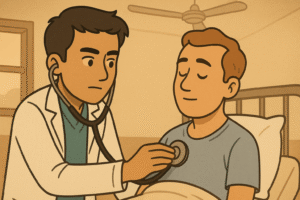
Patients Force You to Trust Your Clinical Instinct
Without endless investigations, you learn to trust your gut — something medical schools never emphasize.
You ask yourself:
-
Is this patient sick or not sick?
-
Do they need immediate intervention?
-
What is the safest decision with what I have?
This is real-world medicine, not theory.
Patients Help You Build Confidence Faster Than Any Training Program
Patients in rural areas rely on you even when:
-
You’re the only doctor on duty
-
You don’t share the same language
-
You don’t have specialist backup
That trust shapes you. It forces you to grow.
Patients Teach Emotional Lessons No Curriculum Includes
These are the lessons that change you forever.
Patients Show Gratitude in Ways You Never Expect
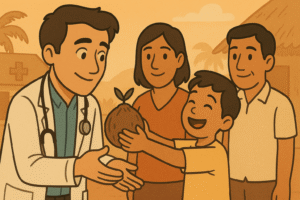
A patient may thank you with:
-
Fresh coconuts
-
A quiet nod
-
A prayer
-
A heartfelt message translated through a relative
These experiences stay with you longer than any lecture.
Patients Teach You to Stay Compassionate Under Pressure
Working in a rural hospital often means:
-
Handling emergencies alone
-
Managing critically ill patients without full support
-
Delivering bad news across cultural barriers
-
Learning humility in moments of uncertainty
This emotional training cannot be found in textbooks — only in the stories of patients.
Real Patients Who Change How Doctors Practice
Here are composite, anonymized examples drawn from real experiences:
The Patient Who Showed You How Culture Changes Health-Seeking Behavior
A man arrives late in illness because he waited for a traditional healer first. You learn compassion, not judgment.
The Patient Who Taught You Diagnostic Humility
A young woman with vague abdominal pain — not fitting any textbook description — turned out to have a rare tropical infection. She made you rethink everything.
The Patient Who Reminded You Why Medicine Is Human
A child who smiles through pain.
A mother who trusts you without a shared language.
A family who thanks you in their own way.
These patients teach lessons no exam can capture.
Why Every Doctor Should Work in a Rural Hospital at Least Once
Working in a rural hospital exposes doctors to a medical reality that textbooks overlook:
-
Cross-cultural communication
-
Rare diseases
-
Atypical presentation of common illnesses
-
Limited-resource decision-making
-
Emotional resilience
Many national health systems, including the NHS, highlight the importance of cross-cultural competence in improving patient outcomes.
These patients make you a better clinician, communicator, and human being.
Patients Become Your Lifelong Teachers
Textbooks teach medical science.
Patients teach medical wisdom.
And patients in these rural hospitals?
They teach you everything you didn’t know you needed to learn.
If you’ve ever worked in a rural hospital— or hope to one day — remember this:
Your greatest teachers will not be your professors.
They will be the patients you meet far from home.
Have you had a patient abroad who taught you an unforgettable lesson?
Share your story — your experience could help another doctor somewhere in the world.
Related Reading:
- How to Adapt to New Hospital Systems Quickly
- Simple Evening Routines for Doctors to Recharge & Relax
- Loneliness Abroad: How I Handle It as a Doctor Working Overseas
1 comment
Patients teach a lot….