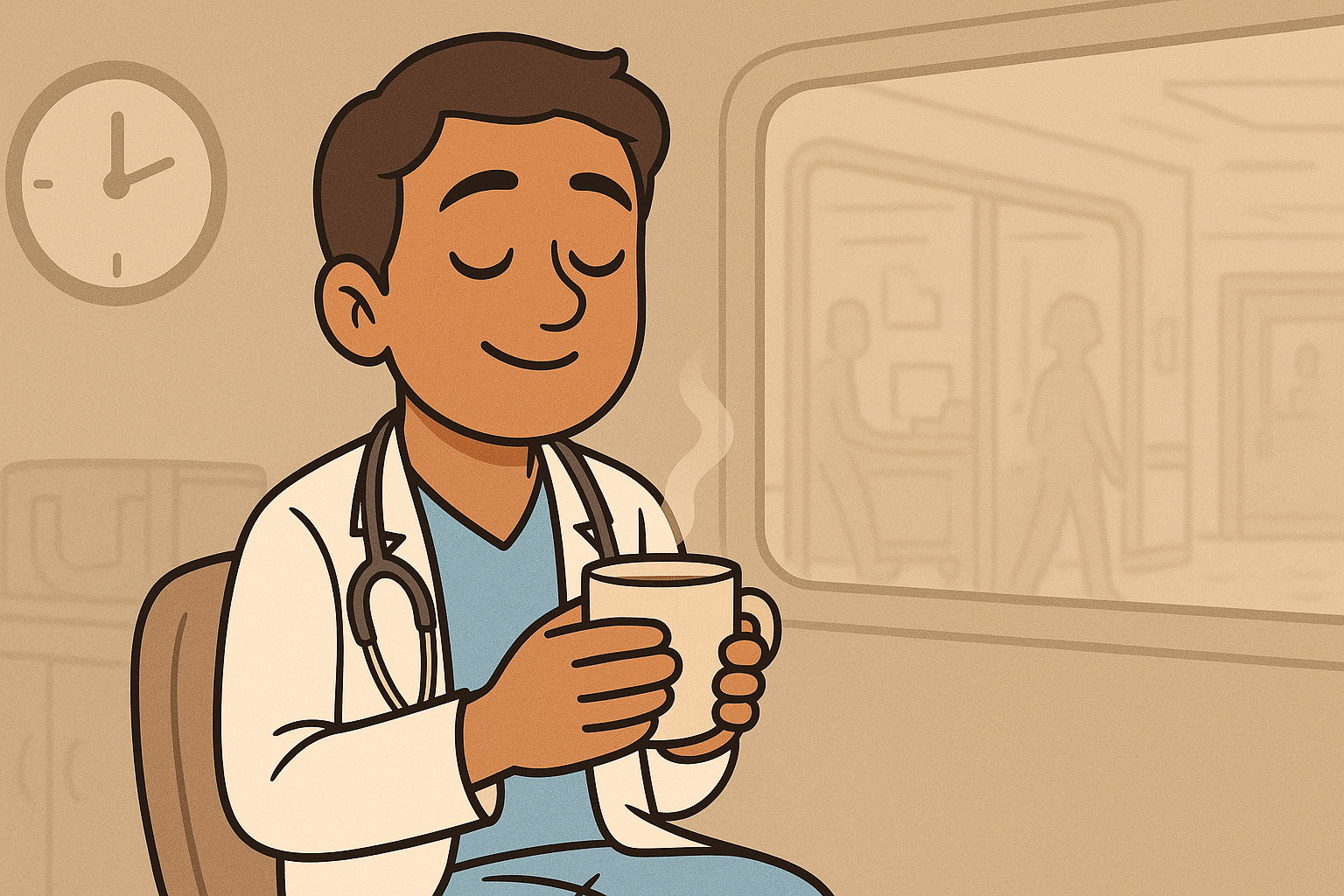

As doctors, we often push through exhaustion, skip meals, and feel guilty about taking breaks during busy shifts. But science shows that breaks aren’t a luxury — they are essential for clinical performance, patient safety, and your long-term health. In this article, we’ll explore how strategic breaks recharge your brain, reduce medical errors, and make you a stronger, more effective doctor.
Why Doctors Struggle to Take Breaks
Despite working in high-stress environments, most doctors rarely take proper breaks. The medical culture celebrates endurance — pushing through fatigue, holding your bladder for hours, and skipping meals during chaos.
But research from the CDC shows that fatigue leads to slower reaction times, cognitive slips, and increased mistakes.
The Guilt Around Taking Breaks in Medicine
Many doctors feel guilty taking breaks because:
-
They don’t want to burden colleagues
-
They fear judgment
-
They think breaks are “unprofessional”
-
They feel responsible for every patient every minute
This guilt prevents doctors from resting — even when they desperately need it.
The Hidden Costs of Skipping Breaks
Skipping breaks comes with consequences that directly affect your clinical performance.
Breaks Prevent Mental Fatigue and Decision Overload
Long shifts overload the prefrontal cortex — the area responsible for judgment and critical thinking. Without breaks, you enter decision fatigue, making small but impactful errors.
Breaks Reduce the Risk of Medical Errors
Studies on healthcare shift workers show that fatigue increases medical error rates significantly. Even WHO emphasizes that rest is critical for safe clinical practice.
Breaks Prevent Emotional Burnout
Chronic stress without breaks leads to emotional exhaustion, irritability, and reduced empathy — classic signs of burnout.
The Science Behind Why Breaks Improve Performance
Breaks aren’t just about feeling relaxed. They work because biology demands recovery cycles.
Breaks Restore Executive Function
When you take short breaks, your brain resets, allowing for:
-
Faster diagnostic accuracy
-
Clearer thinking
-
Better pattern recognition
Breaks Lower Cortisol and Stress Hormones
Short breaks — even 10-15 minutes — reduce stress, improve HRV, and stabilize emotional responses.
Breaks Support the Ultradian Rhythm (Every 90 Minutes)
Your body naturally works in 90-minute cycles. Taking breaks at the end of these cycles:
-
Boosts productivity
-
Keeps your energy stable
-
Prevents cognitive crashes
Types of Breaks That Actually Work for Doctors
Not all breaks are equal. Some restore your brain; others drain it.
Micro-Breaks (30 Seconds – 2 Minutes)
Micro-breaks are powerful because they fit into even the busiest shifts. Examples:
-
Eye rest (look 20 feet away for 20 seconds)
-
Slow breathing
-
Stretching your shoulders and neck
Mental Reset Breaks (3–5 Minutes)
These breaks improve your mental clarity during stressful periods:
-
Short hallway walk
-
Sipping water mindfully
-
Changing environment
Proper Meal Breaks (20-30 Minutes)
Nutrition + pause time = energy restoration + stable glucose
Doctors who take real meal breaks report better mood and performance.
Avoid “Fake Breaks”
Some activities feel like breaks but don’t actually refresh the brain:
-
Scrolling social media
-
Charting
-
Drinking coffee to replace rest
These increase fatigue instead of reducing it.
How Breaks Make You a Better Doctor
The benefits of breaks directly translate into better patient outcomes.
Breaks Improve Diagnostic Accuracy
Doctors who take breaks during long shifts:
-
Make fewer cognitive slips
-
Recognize patterns faster
-
Have sharper clinical reasoning
Breaks Strengthen Communication With Patients
Rested doctors show:
-
More empathy
-
Better listening
-
Improved patient satisfaction
Breaks Reduce Irritability and Emotional Fatigue
Fatigue reduces patience — especially in stressful ED or ICU settings.
Breaks keep your emotional responses stable.
Breaks Improve Procedural Performance
Even surgeons show improved precision when they take brief breaks between procedures, according to studies referenced by the NIH.

Barriers Doctors Face When Taking Breaks
Even when we want to take breaks, several obstacles get in the way.
Staff Shortages Limit Break Time
Hospitals with limited manpower often push doctors to stay continuously active.
Fear of Burdening Colleagues
Doctors hesitate to take breaks because they feel coworkers will suffer more workload.
Toxic Workplace Culture
Many hospitals still believe:
“Real doctors don’t take breaks.”
This mentality leads to burnout.
High Patient Load
When your shift is non-stop, it feels impossible to step away — even for 60 seconds.
Practical Ways Doctors Can Take Breaks Even on Busy Shifts
Here is how to realistically fit breaks into medical life.
The 90-Second Reset Rule
Every time you transition between tasks, pause for 90 seconds.
This improves clarity and reduces errors.
Micro-Break Coverage
Trade 3-5 minute coverage with team members during peak hours.
Everyone benefits — including patient safety.
Create a “Break Ritual”
Your brain responds well to routine. You can try:
-
Step outside for fresh air
-
Drink water slowly
-
Do 4–6 deep breaths
Use Wearables to Track Your Need for Breaks
Tools like:
-
Apple Watch
-
WHOOP
-
Oura Ring
can track stress, HRV, and recovery — helping you know when to take a break.
Evidence From Hospitals That Prioritize Breaks
Hospitals that implemented structured breaks saw:
-
Lower medical errors
-
Higher staff morale
-
Reduced burnout
-
Better patient satisfaction
Breaks aren’t a waste of time — they are a safety protocol.
How to Build a Break-Friendly Routine as a Doctor
A break strategy is more effective when built into your entire shift.
Pre-Shift Break Preparation
-
Arrive a few minutes early
-
Hydrate
-
Do 1 minute of deep breathing
Breaks During Shifts
-
Micro-breaks every 60–90 minutes
-
Meal break when possible
-
Bathroom break before long procedures
Post-Shift Recovery
-
Disconnect from work mentally
-
Light stretching
-
Protect your sleep environment
Breaks Are Not Optional — They Are a Medical Responsibility
Taking breaks doesn’t make you weak or less dedicated.
Breaks make you a sharper, safer, more effective doctor.
By respecting your body’s need for rest, you reduce errors, improve patient care, and protect your long-term health.







2 comments
Thanks Sir
Be healthy 💌
Rest..rest…