
Night shifts are universally acknowledged as difficult. Every doctor knows the fatigue, the circadian disruption, and the cognitive fog that comes with working through the night. But when you are working abroad, night shifts are not just harder—they are fundamentally different.
I believed the same myth many doctors believe: a night shift is a night shift anywhere. Same patients. Same protocols. Same medicine. Just different hours.
That belief was wrong.
Working night shifts abroad exposed a deeper, more sustained strain—one that blended biology, psychology, culture, and isolation. This article breaks down why night shifts hit harder when you work abroad, especially for foreign and IMG doctors, and why struggling is not a personal failure but a predictable outcome.
Why Night Shifts Are a Biological Stress Test for Doctors
Night shifts place doctors in direct conflict with human biology. No amount of motivation or professionalism can override this.
At night, the body is biologically programmed for rest. Melatonin secretion rises, cortisol drops, reaction time slows, and decision-making becomes less efficient. Night shifts force doctors to deliver high-stakes care during a window when the brain is least prepared to do so.
According to the National Institutes of Health, long-term night shift work is associated with increased risks of cardiovascular disease, metabolic disorders, depression, and cognitive impairment.
Night shifts are not a lifestyle inconvenience. They are a physiological challenge.
Why Night Shifts Are Harder When You Work Abroad
Night shifts are difficult everywhere—but working night shifts abroad adds multiple invisible layers of stress that compound the damage.
Night Shifts and Circadian Rhythm Disruption Abroad
When doctors move abroad, their circadian rhythm is already destabilized. Changes in latitude, daylight exposure, climate, and seasonal patterns all affect sleep-wake cycles.
Working night shifts abroad often means:
-
Chronic circadian misalignment that never fully resets
-
Persistent “social jet lag” even on off days
-
Sleep that is shorter, lighter, and less restorative
Unlike temporary jet lag, this disruption can last months or years.
Night Shifts Abroad and the Problem of Poor Sleep Environments
One of the most underestimated factors in night shift fatigue abroad is sleep environment.
Doctors working night shifts overseas often deal with:
-
Shared accommodation
-
Noise during daytime sleep hours
-
Heat, humidity, or unfamiliar climate
-
Poor blackout conditions
Night shifts require high-quality daytime sleep. Abroad, that sleep is frequently compromised, leading to cumulative sleep deprivation that no single “recovery day” can fix.
The Psychological Weight of Night Shifts for Foreign Doctors
Night shifts amplify psychological strain even in familiar systems. Abroad, that strain intensifies.
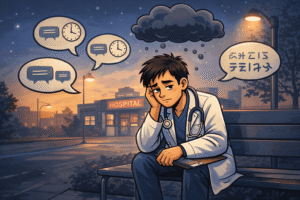
Night Shifts and Loneliness When Working Abroad
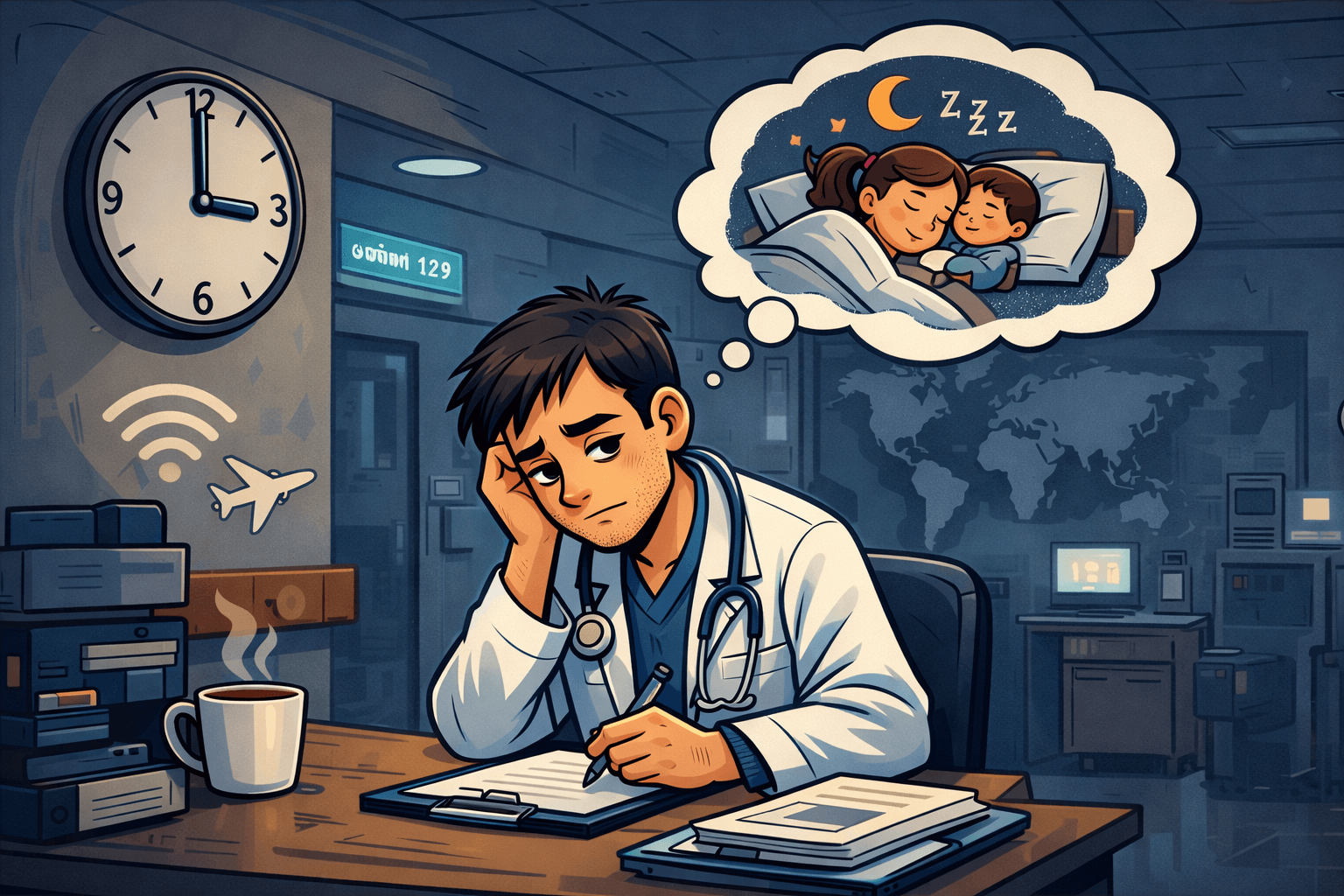
During night shifts, isolation becomes unavoidable. While colleagues may be physically present, emotional support is often absent.
For doctors working abroad:
-
Family and friends are asleep in different time zones
-
There is no immediate emotional decompression after shifts
-
Social connections are weaker or newly formed
Night shifts remove the usual buffers that protect mental health.
Night Shifts and Constant Vigilance in a Foreign System
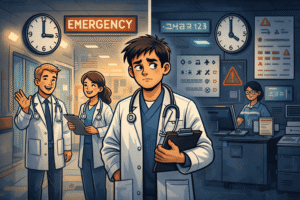
Working night shifts abroad often means operating in a healthcare system you did not train in.
Foreign doctors on night shifts must remain constantly vigilant:
-
Different protocols
-
Different escalation pathways
-
Different documentation standards
-
Language or cultural barriers during emergencies
At 3 a.m., this cognitive load is exhausting. Mental energy that should go into patient care is spent navigating the system.
Why Night Shifts Are Often Heavier for Doctors Working Abroad
This is rarely discussed openly, but it matters.
Night Shifts and Service Burden for IMG Doctors
In many systems, foreign doctors disproportionately cover:
-
More frequent night shifts
-
Less supervised night shifts
-
Service-heavy night roles
Night shifts abroad may involve higher responsibility with fewer supports—especially for junior or IMG doctors.
Night Shifts and the Silent Pressure to “Be Grateful”
Doctors working abroad often feel an unspoken obligation to tolerate hardship.
Night shifts become something to endure quietly because:
-
Complaining feels risky
-
Fatigue feels like weakness
-
Gratitude replaces advocacy
This pressure drives doctors to push past safe limits during night shifts, increasing burnout risk.
Why Recovery After Night Shifts Is Slower Abroad
Recovery is not just about sleep duration. It is about psychological safety and stability.
Night Shifts Without a Recovery Ecosystem
Doctors working night shifts abroad often lack:
-
Family support
-
Long-term friendships
-
Familiar routines
Even days off feel unsettled. Sleep cycles remain fragmented. Emotional recovery is incomplete.
Warning Signs Night Shifts Are Burning You Out Abroad
If you are working night shifts abroad, watch for these red flags:
-
Persistent fatigue despite adequate sleep time
-
Emotional numbness or detachment
-
Anxiety before night shifts
-
Increasing caffeine dependence
-
Loss of motivation or meaning in work
According to the World Health Organization, burnout is an occupational phenomenon—not a personal failing. Night shifts are a major contributor.
What Actually Helps Doctors Survive Night Shifts Abroad
There is no perfect solution—but there are strategies that work.
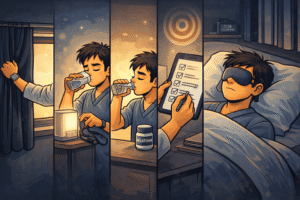
Managing Night Shifts by Respecting Biology
Doctors who survive night shifts abroad focus on:
-
Controlling light exposure aggressively
-
Strategic, limited caffeine use
-
Consistent sleep timing rather than chasing “8 hours”
The Sleep Foundation provides evidence-based guidance on shift work sleep strategies that align with this approach.
Reducing Cognitive Load During Night Shifts Abroad
Night shifts should be simplified, not optimized.
Helpful strategies include:
-
Fixed pre-shift routines
-
Checklists for common emergencies
-
Minimizing unnecessary decisions
Reducing cognitive load preserves mental energy for critical moments.
When Night Shifts Abroad Should Be Reconsidered
There is a point where endurance becomes harm.
You should reconsider night shifts abroad if:
-
Your health is deteriorating
-
You feel emotionally depleted
-
Patient safety feels compromised
-
Recovery never feels complete
Stepping back from night shifts is not failure. It is risk management.
Night Shifts Are Harder Abroad — And That’s Not a Personal Flaw
Night shifts hit harder when you work abroad because biology, isolation, and system stress overlap. This is not a resilience problem. It is a predictable outcome.
Struggling does not mean you are weak. It means you are human, working against physiology in an unfamiliar environment.
Conclusion: Surviving Night Shifts Abroad Is About Systems, Not Willpower
Night shifts will never be easy. But working night shifts abroad magnifies their impact in ways most doctors are never warned about.
The goal is not to “toughen up.”
The goal is to build systems that respect biology, protect mental health, and preserve long-term sustainability.
If you are working night shifts abroad and finding it harder than expected—you are not alone. And you are not broken.